


No, Original Medicare does not cover hearing aids or the exams to fit them. This has been true since Medicare began in 1965 and remains true in 2026. Medicare Part B does cover diagnostic hearing and balance exams when your doctor orders one for a medical reason, and it covers certain eye exams tied to conditions like diabetes or glaucoma, but routine hearing aids, routine eye exams, and glasses are excluded. Most Medicare Advantage plans add hearing and vision benefits that Original Medicare doesn’t offer.
If you’ve started noticing you turn the TV up a little louder than you used to, or your eye doctor recently mentioned new glasses, you might assume Medicare has you covered. It’s a reasonable assumption, and it’s also wrong. Hearing aids and routine vision care are two of the biggest gaps in Original Medicare, and they catch people off guard because both feel like basic healthcare.
This is one of the most common questions I hear from clients in the Tulsa area, so let’s walk through exactly what Original Medicare does and doesn’t pay for when it comes to hearing and vision, what Medicare Advantage typically adds, and what your options look like if you need coverage Original Medicare won’t provide.
Does Medicare Cover Hearing Aids?
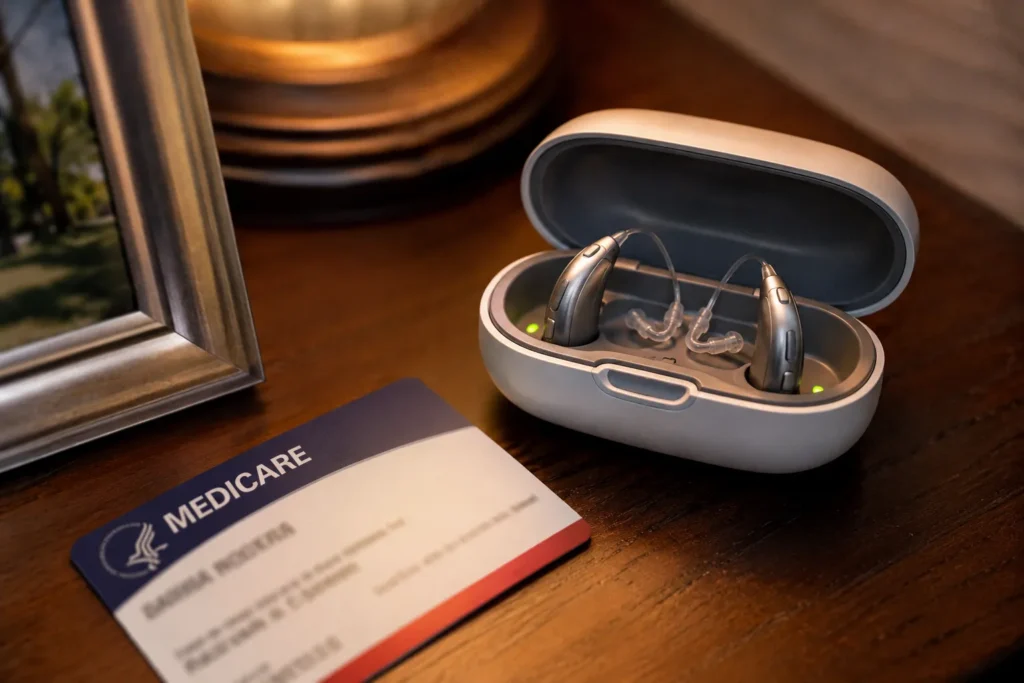
No. Original Medicare, both Part A and Part B, does not cover hearing aids or the exams needed to fit them. This exclusion has been written into the Medicare statute since the program was created in 1965, and despite several bills introduced in Congress over the years, including proposals aimed at 2026, none have become law as of this writing.
If you have Original Medicare only, you’re responsible for 100% of the cost of hearing aids, which typically run $3,500 to $7,500 or more per pair from a clinic, though over-the-counter options are considerably cheaper.
What Hearing Care Does Original Medicare Actually Cover?
Original Medicare isn’t a total blank on hearing care, it just draws the line in a specific place. Part B covers a diagnostic hearing or balance exam when your doctor orders one to evaluate a medical condition, and Medicare has also expanded coverage to include one hearing exam every 12 months for certain non-acute conditions without a doctor’s order. After you meet the Part B deductible of $283 in 2026, you’ll pay 20% of the Medicare-approved amount for a covered exam.
Cochlear implants and bone-anchored hearing aids are treated differently than standard hearing aids. Because they’re surgically implanted and classified as prosthetic devices rather than hearing aids, Medicare Part B covers them when they’re medically necessary.
Does Medicare Cover Eye Exams?
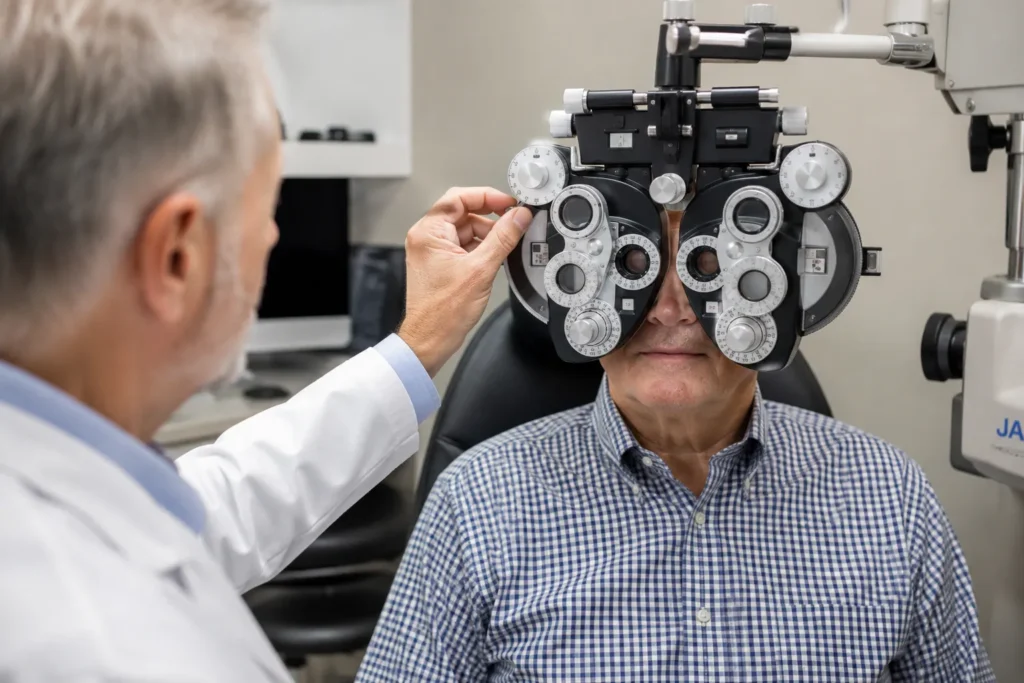
Mostly no. Original Medicare doesn’t cover routine eye exams used to check your vision or update a glasses or contact lens prescription. It also doesn’t cover the cost of glasses or contact lenses in most situations.
There are specific exceptions. If you have diabetes, Medicare Part B covers one eye exam per year to screen for diabetic retinopathy. If you’re at high risk for glaucoma, Medicare covers an annual glaucoma test. And if you’ve had cataract surgery with an intraocular lens implant, Medicare will cover one pair of standard eyeglasses or one set of contact lenses afterward.
A Trade-Off Worth Understanding
It’s tempting to read “Medicare covers a diabetic eye exam” and assume that means your whole visit is covered. In practice, the exam that diagnoses a medical condition may be covered, while the separate refraction test used to determine your glasses prescription typically isn’t, and that portion is billed to you directly, often $50 to $150.
What Do Medicare Advantage Plans Cover for Hearing and Vision?

Medicare Advantage plans fill much of this gap, since private insurers are free to add benefits Original Medicare doesn’t include. In 2026, roughly 95% of Medicare Advantage enrollees are in a plan offering some hearing benefit, and a similar share have access to routine vision coverage.
Structure varies by plan. Some offer a fixed annual allowance toward hearing aids, commonly $500 to $3,000 per year, while others use a copay structure per device. Vision benefits often include an annual eye exam and an allowance toward frames, lenses, or contacts, though coverage caps and in-network requirements vary considerably from plan to plan.
A Real Scenario Worth Considering
Say you’re on Original Medicare only and your audiologist recommends a $5,000 pair of hearing aids. Without additional coverage, that entire cost falls on you. A Medicare Advantage plan with a $2,000 annual hearing allowance wouldn’t cover the full cost, but it would meaningfully change what you actually pay out of pocket, which is exactly the kind of math worth running before you commit to a plan or a purchase.
What Other Options Exist If Medicare Doesn’t Cover What You Need?
If Original Medicare and your Advantage plan’s hearing or vision benefit still leave a gap, a few paths are worth exploring. Over-the-counter hearing aids, available without a prescription or fitting since a 2022 FDA rule, offer a lower-cost option for adults with mild to moderate hearing loss.
Standalone vision insurance can be purchased independently of Medicare and often covers routine exams and eyewear allowances. HSA and FSA funds can also be used for hearing aids, batteries, and hearing exams. And if you’re a veteran enrolled in VA health care, the VA provides hearing aids free of charge, including fittings, repairs, and batteries.
How Do You Decide What Coverage You Actually Need?
Start with your own situation. If you’re not currently dealing with hearing or vision changes, this may not need to drive your Medicare decision. But if you already know you’ll need hearing aids or regular vision care, it’s worth weighing that heavily when comparing Medicare Advantage plans, since the difference between a $500 allowance and a $2,500 allowance can be significant.
This is exactly the kind of comparison I help clients in the Tulsa area work through, since the right plan depends entirely on what you actually expect to need. If you’d like help comparing your options, you can schedule a free consultation and we’ll go through what fits your situation.
Frequently Asked Questions
Does Medicare cover hearing aids?
No. Original Medicare does not cover hearing aids or the exams to fit them. Medicare Part B does cover a diagnostic hearing exam when a doctor orders one for a medical reason, but not the hearing aids themselves.
Does Medicare pay for hearing aids at all?
Original Medicare pays nothing toward hearing aids. Some Medicare Advantage plans offer an annual allowance or copay structure for hearing aids as an added benefit, though coverage varies by plan.
Does Medicare cover eye exams?
Original Medicare doesn’t cover routine eye exams for glasses or contacts, but it does cover certain medical eye exams, including annual diabetic eye exams and glaucoma testing for high-risk patients.
Does Medicare cover glasses or contact lenses?
Generally no, except after cataract surgery with an intraocular lens implant, when Medicare covers one pair of standard eyeglasses or one set of contact lenses.
What are my options if Medicare doesn’t cover the hearing aids or glasses I need?
You can look into a Medicare Advantage plan with hearing and vision benefits, over-the-counter hearing aids, standalone vision insurance, or using HSA or FSA funds to cover the cost.
The Bottom Line
Hearing aids and routine eye care are two of the most surprising gaps in Original Medicare, mostly because they feel like basic healthcare rather than optional extras. The rules haven’t changed since 1965, but your options for filling the gap, through Medicare Advantage, over-the-counter devices, or standalone coverage, are broader than they used to be.
If hearing or vision coverage is a priority as you weigh your Medicare options, call 918-815-6382 or schedule a free consultation and we’ll help you find a plan that fits. You can also browse our Medicare plan options or read our Medicare frequently asked questions for more detail.